
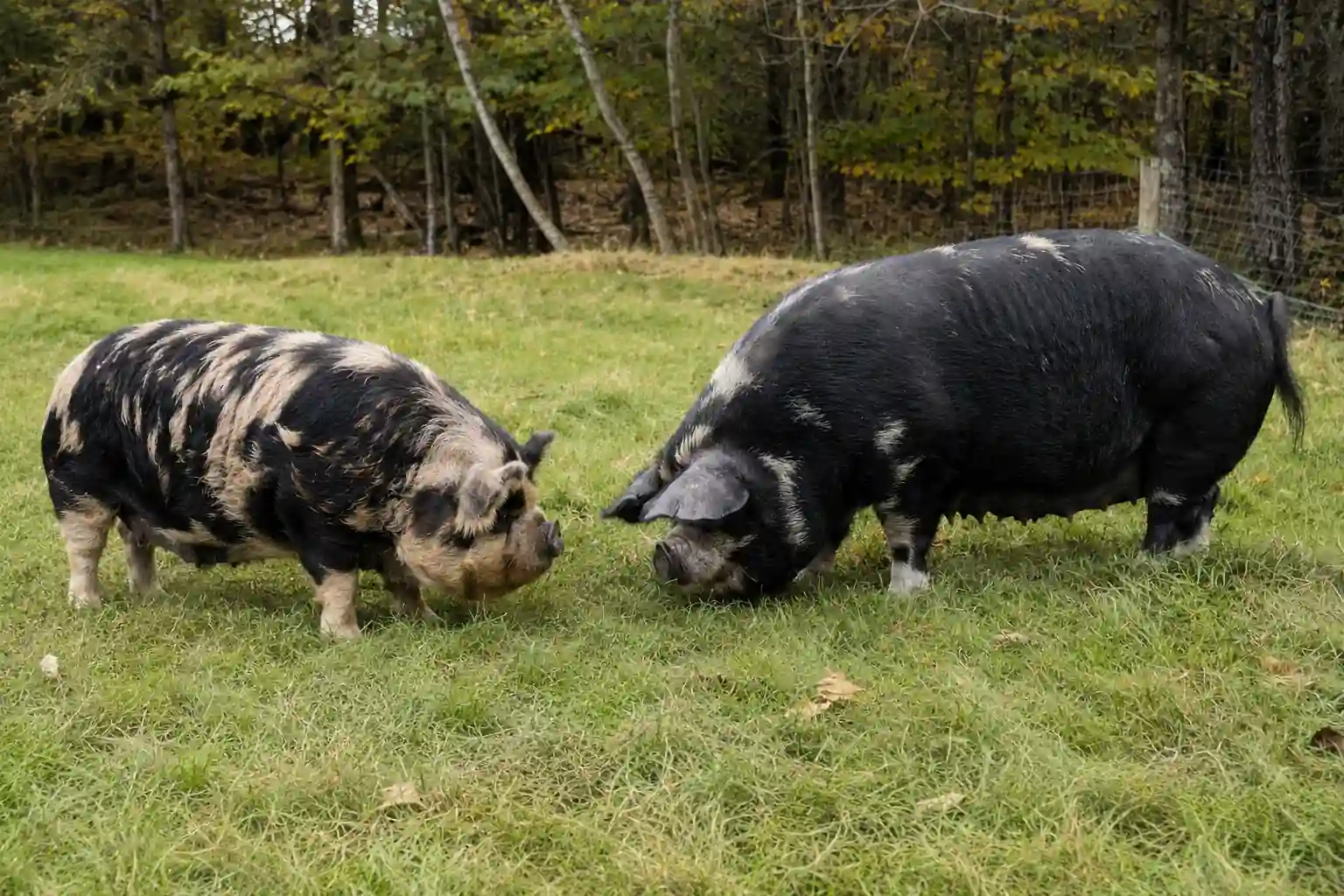
Choosing between Kunekune pigs and Idaho Pasture Pigs usually comes down to one honest question: what job do you want the pigs to do on your farm? Both breeds can fit a pasture-based homestead, but they are not the same animal, and they do not serve every family or farm goal equally well.
I can speak firsthand about Kunekunes; I cannot pretend to have the same hands-on history with every pasture breed. When I was choosing livestock for BF Farm, I started with the job the animals needed to do—fit the land, fit the handling system, fit the breeding goals—and researched breeds from there. That is the lens I use in this comparison. The Idaho Pasture Pig details below come from its registry and the other cited sources, not from me claiming personal experience I do not have.
The Short Answer
Kunekune pigs are usually the better fit for people who want a smaller, calmer, easier-to-manage grazing pig with strong appeal for small farms, breeding programs, family homesteads, and slower, quality-focused pork production.
Idaho Pasture Pigs are often chosen by people who want a larger pasture pork pig that grows faster and produces more meat sooner, while still being more pasture-oriented than many conventional hog breeds.
Neither choice is automatically better. The right choice depends on your land, fencing, feed budget, handling ability, breeding goals, processing goals, and how much pig you truly want to manage.
What Is a Kunekune Pig?

Kunekune pigs are a smaller heritage-style grazing pig originally associated with New Zealand. They are known for their short legs, round bodies, friendly temperaments, upturned snouts, hairy coats, and often the little wattles that hang under the chin. [1]
For many small farms, the biggest appeal of the Kunekune is manageability. They are not tiny animals, and they still require real fencing, shelter, feed, minerals, water, and care. But compared with many larger hog breeds, a well-bred Kunekune is often easier for a small homestead to handle.
Kunekunes are also known for grazing. They can do well on pasture when the pasture is managed properly, though “grazing pig” does not mean “free pig.” They still need good nutrition, especially during growth, breeding, pregnancy, lactation, winter, drought, and poor pasture conditions.
A quality Kunekune should be chosen for more than cuteness. Structure, temperament, sound feet and legs, health, genetics, body condition, and long-term usefulness all matter.
What Is an Idaho Pasture Pig?
The Idaho Pasture Pig, often shortened to IPP, is a more recently developed pasture pork pig. It is commonly described as a cross-based breed developed from Duroc, Berkshire, and Kunekune influence. The goal was to create a pig that could graze well, grow efficiently, and produce a practical pork carcass for pasture-based farms. [2]
Compared with Kunekunes, Idaho Pasture Pigs are usually larger-framed and more production-focused. Many homesteaders choose them because they want a pig that can use pasture but still finish faster and provide more meat than a typical Kunekune.
That can be a benefit. It can also be a responsibility. More pig usually means more feed, more strength, more pressure on fencing, more manure, more pasture impact, and more animal to handle.
Temperament: Calm Matters More Than People Realize
Temperament is one of the biggest reasons people are drawn to Kunekunes.
A calm pig is easier to feed, move, sort, observe, and live around. On a small farm, that matters every day. A pig with a good temperament makes chores safer and more enjoyable. A pig with poor temperament can turn simple chores into stress.
Kunekunes are often known for being friendly and people-oriented. That does not mean every Kunekune is perfect. Temperament is affected by genetics, handling, environment, age, sex, and management. Boars still need respect. Sows with piglets need space. Piglets need patient handling. No breed removes the need for common sense.
Idaho Pasture Pigs can also have good temperaments, especially from careful breeders. But because they are generally larger and more production-oriented, temperament and manageability should be evaluated seriously before buying breeding stock.
When comparing the two, ask this practical question:
Can I safely handle this pig when it is mature, not just when it is cute?
That one question prevents a lot of regrets.
Size and Handling
Kunekunes are generally smaller and lower to the ground. That makes them attractive for families, first-time pig owners, smaller acreage, and people who want pigs that are easier to manage without heavy facilities.
Idaho Pasture Pigs generally have more size and growth potential. That can be useful for meat production, but it also means they may require stronger fencing, more feed, more space, and more confidence from the owner.
A bigger pig is not bad. A smaller pig is not automatically easy. But size changes everything.
It changes:
- How much feed you buy
- How much pressure the pig puts on fences
- How much land gets disturbed
- How hard the pig is to move
- How much meat goes into the freezer
- How comfortable new owners feel during chores
- How much infrastructure the farm needs
For small homesteads, Kunekunes often fit the “manageable but useful” category very well. For farms wanting more pork sooner, Idaho Pasture Pigs may be attractive.
Grazing and Pasture Use
Both Kunekunes and Idaho Pasture Pigs are associated with pasture-based systems, but pasture success depends more on management than breed name.
Good pasture pig management includes:
- Rotating pigs before the ground is damaged
- Providing shade in hot weather
- Providing dry shelter in wet and cold weather
- Feeding hay or extra feed when grass is poor
- Avoiding overstocking
- Keeping water available at all times
- Watching body condition
- Protecting young pigs from weather stress
- Preventing mud lots from becoming permanent living areas
Kunekunes are often praised for grazing because they tend to root less aggressively than many larger hog breeds when properly fed and managed. Their shorter snouts and grazing nature can make them easier on pasture, especially when they are not hungry, crowded, bored, or mineral-deficient.
Idaho Pasture Pigs are also bred with pasture use in mind, but their larger size and growth goals can mean they need more total nutrition. A pig that grows faster usually needs more groceries.
The honest rule is simple: pasture helps, but pasture does not replace management.
Meat Production Differences
This is where the decision becomes very practical.
Kunekunes can produce excellent pork, but they are usually slower-growing and smaller than many meat-focused hogs. They are often a better fit for families who value flavor, manageable size, homegrown meat, and a slower heritage-style approach.
For some families, that is perfect. A smaller carcass may fit the freezer better. A slower-growing pig may fit a low-pressure homestead rhythm. A calm pig may be worth more than a fast pig.
Idaho Pasture Pigs are generally chosen when the goal is more efficient pasture pork production. They may reach butcher size sooner and produce more meat per animal. That can be a major advantage for families wanting to fill freezers or farms wanting to sell pork. [2]
But bigger and faster are not always better. They also mean a larger feed bill, stronger infrastructure, and more planning.
Ask yourself:
Do I want the most meat as quickly as possible, or do I want a smaller, calmer grazing pig that fits my farm long term?
That question usually points people in the right direction.
Feed Costs and Growth Expectations
No pig should be bought with the idea that it will live on grass alone year-round. Even grazing pigs need balanced nutrition. [3]
Kunekunes may do well with a more modest feed program when good pasture is available, but they still need proper protein, minerals, water, and seasonal support. Growing pigs, bred sows, nursing sows, and winter pigs need more than grass.
Idaho Pasture Pigs, because they are generally more growth-oriented, may require more feed overall. They may also reward that feed with faster growth and more pork.
The cheaper pig is not always the pig with the lower purchase price. The real cost includes:
- Feed from weaning to maturity
- Hay or forage support
- Minerals
- Fencing
- Shelter
- Water systems
- Processing
- Breeding costs
- Vet care
- Time and labor
A well-matched pig saves money because it fits the farm. A mismatched pig gets expensive quickly.
Fencing Needs
Both breeds need real fencing.
Kunekunes may be easier on fences than larger hogs when properly trained and fed, but they are still pigs. If the fence is weak, they will eventually find out. If there is better food on the other side, they may test it. If breeding animals are separated poorly, they may challenge your setup.
Idaho Pasture Pigs may put more pressure on fencing simply because they are often larger and stronger. Good electric training, strong perimeter fencing, secure gates, and proper rotation systems matter.
For either breed, new owners should plan for:
- Strong perimeter fencing
- Electric training
- Secure gates
- Shade
- Dry bedding
- Winter shelter
- Waterers that cannot easily be tipped
- Safe separation areas
- Quarantine space for new animals
A pig setup should be built for the pig at full size, not the piglet on pickup day.
Breeding Program Goals
If your goal is to start a breeding program, the decision becomes more serious.
Kunekunes are a strong option for people who want to raise registered breeder stock, preserve breed qualities, produce manageable pigs for other small farms, and focus on temperament, structure, genetics, and responsible placement.
A good Kunekune breeding program should not be built around color alone. Pretty pigs sell attention, but structure and soundness build reputation.
Important Kunekune breeding traits include:
- Good feet and legs
- Correct body structure
- Calm temperament
- Healthy growth
- Good mothering ability
- Functional underline and teats
- Appropriate size and body condition
- Genetic diversity
- Responsible boar selection
- Honest buyer education
Idaho Pasture Pigs may appeal to breeders focused on pasture pork production and meat efficiency. If raising them as breeding stock, the same principles apply: choose sound, healthy, useful animals and be honest about what they are suited for.
For anyone starting a breeding program, the question should never be, “Can I make piglets?”
The better question is, “Can I produce pigs that make sense for the next owner?”
Which Pig Is Better for Beginners?
For many beginners, Kunekunes are the easier starting point because of their size, temperament, and small-farm friendliness.
That does not mean they are effortless. A beginner still needs to learn fencing, feed, minerals, parasite prevention, body condition, hoof care, seasonal care, breeding decisions, and safe handling.
But a well-bred Kunekune often gives a new owner a better chance to learn without being overwhelmed by the size and power of a larger hog.
Idaho Pasture Pigs can work for beginners who are prepared, especially if the person has good fencing, enough land, a meat-production goal, and confidence handling livestock. They may not be the best first pig for someone who only wants a small, gentle pasture companion.
Which Pig Is Better for Meat?
If the main goal is more pork in less time, Idaho Pasture Pigs may have the advantage.
If the goal is manageable homegrown pork from a smaller grazing pig, Kunekunes may be the better fit.
Kunekune pork can be excellent, but people need realistic expectations. Kunekunes are not commercial hogs in a smaller outfit. They are slower, smaller, and often better suited to families who value a calmer process and quality over speed.
For homesteaders raising their own meat, Kunekunes can make a lot of sense. They are approachable, useful, and easier to keep in smaller settings. For larger pork production goals, an Idaho Pasture Pig may be more efficient.
Which Pig Is Better for Small Acreage?
Kunekunes usually have the advantage on small acreage.
Their smaller size and grazing tendency can make them easier to rotate and manage. They may fit better on smaller homesteads where space, fencing, and feed storage are limited.
But small acreage does not mean no management. Too many pigs on too little land will damage pasture no matter the breed. Even Kunekunes can turn a small area into mud if they are kept there too long.
For small acreage, fewer pigs managed well will almost always beat too many pigs managed hopefully.
Which Pig Is Better for Families?
Kunekunes are often the better family pig, especially when temperament and manageability are high priorities.
Families often want pigs that are calm, friendly, and not overwhelming. Kunekunes fit that role well when they come from thoughtful breeding and receive consistent handling.
Idaho Pasture Pigs may still be family-friendly, but because they are generally larger and more meat-production focused, buyers should pay close attention to temperament, mature size, and handling needs.
Children should never be expected to manage pigs alone. Even friendly pigs are strong animals. Good family pigs still require adult supervision and safe routines.
Which Pig Is Better for Breeder Stock?
For BF Farm Kunekune Pigs, the focus is quality Kunekune breeder stock for families and homesteads that want to raise their own meat, build a responsible herd, or start a thoughtful breeding program.
That is where Kunekunes shine.
A good Kunekune is not just a cute pig. It is a useful, manageable, breeding-quality animal with a purpose. For the right buyer, Kunekunes offer a balance of temperament, grazing ability, smaller size, beauty, heritage appeal, meat potential, and long-term homestead usefulness.
Idaho Pasture Pigs may be a good breeder-stock choice for people focused heavily on pasture pork efficiency. Kunekunes may be the better breeder-stock choice for people who want manageable pigs with strong small-farm appeal and a breed identity that fits both meat and breeding goals.
Common Mistakes When Choosing Between the Two
The biggest mistake is choosing based on a photo.
Piglets are easy to like. The real decision is about the mature animal.
Avoid these mistakes:
- Buying only because the piglet is cute
- Choosing a breed without knowing mature size
- Assuming pasture means no feed bill
- Starting with breeding animals before learning basic care
- Buying unrelated pigs without understanding genetics
- Ignoring temperament
- Underbuilding fences
- Keeping too many pigs on too little land
- Choosing speed of growth over manageability
- Choosing small size without considering meat goals
A pig should fit the farm you actually have, not the farm you hope to build someday.
Questions to Ask Before Buying
Before choosing Kunekunes or Idaho Pasture Pigs, ask yourself:
- Do I want pigs mainly for breeding, meat, pets, or all three?
- How much land do I have for rotation?
- Is my fencing ready for mature pigs?
- Do I want a smaller pig or a faster-growing pork pig?
- Am I prepared for feed costs beyond pasture?
- Do I have shelter for heat, rain, wind, and winter?
- Can I safely handle a mature boar or sow?
- Do I understand processing timelines and freezer space?
- Am I buying from someone who understands the breed?
- Do I want to start a breeding program responsibly?
The answers matter more than the breed label.
Side-by-Side Comparison
| Category | Kunekune Pig | Idaho Pasture Pig |
|---|---|---|
| General size | Smaller, more compact | Usually larger |
| Temperament | Often very calm and friendly | Can be calm, but size matters |
| Growth speed | Slower | Often faster |
| Meat yield | Smaller carcass | Larger meat potential |
| Pasture use | Strong grazing reputation | Bred for pasture pork |
| Beginner friendly | Often a good fit | Good if owner is prepared |
| Small acreage | Usually a strong fit | May need more space and feed |
| Breeding focus | Heritage-style breeder stock, small farm usefulness | Pasture pork production focus |
| Feed needs | Still needs balanced nutrition | Often higher total feed needs |
| Best fit | Small farms, breeder stock, manageable pork, family homesteads | Pasture pork, faster meat production, larger homestead systems |
So Which One Should You Choose?
Choose Kunekunes if you want:
- A smaller grazing pig
- Calm temperament
- Manageable breeder stock
- A pig that fits small farms well
- Homegrown pork without raising a large commercial-type hog
- A breed with strong family and homestead appeal
- A slower, thoughtful approach to pigs
- A breeding program focused on structure, temperament, health, and usefulness
Choose Idaho Pasture Pigs if you want:
- More pork sooner
- A larger pasture pig
- Faster growth potential
- A pig more focused on meat production
- A pasture pork system with more output per animal
- A homestead hog that may finish faster than a Kunekune
Both can be good pigs. The right pig is the one that fits your actual goals.
Final Thoughts
Kunekunes and Idaho Pasture Pigs both have a place in pasture-based farming, but they serve different kinds of owners best.
For a family or homestead wanting calm, manageable pigs with strong grazing ability, good temperament, and real value as breeder stock, Kunekunes are hard to beat. They are especially well suited for people who want to raise their own meat, build a small breeding herd, or work with pigs that are useful without being overwhelming.
For someone focused mainly on faster pork production and larger carcass size, Idaho Pasture Pigs may be worth considering.
The best choice is not the trendiest breed. It is the pig that still makes sense after the fence is built, the feed is bought, the weather turns bad, and the piglet grows up.
About the Author
I have managed Kunekunes on pasture in Georgia and Missouri. My firsthand comments in this comparison are limited to that Kunekune experience; information about Idaho Pasture Pigs is presented from the cited registry and husbandry sources. The point is to help a reader define the farm job first, then compare breeds against it.