
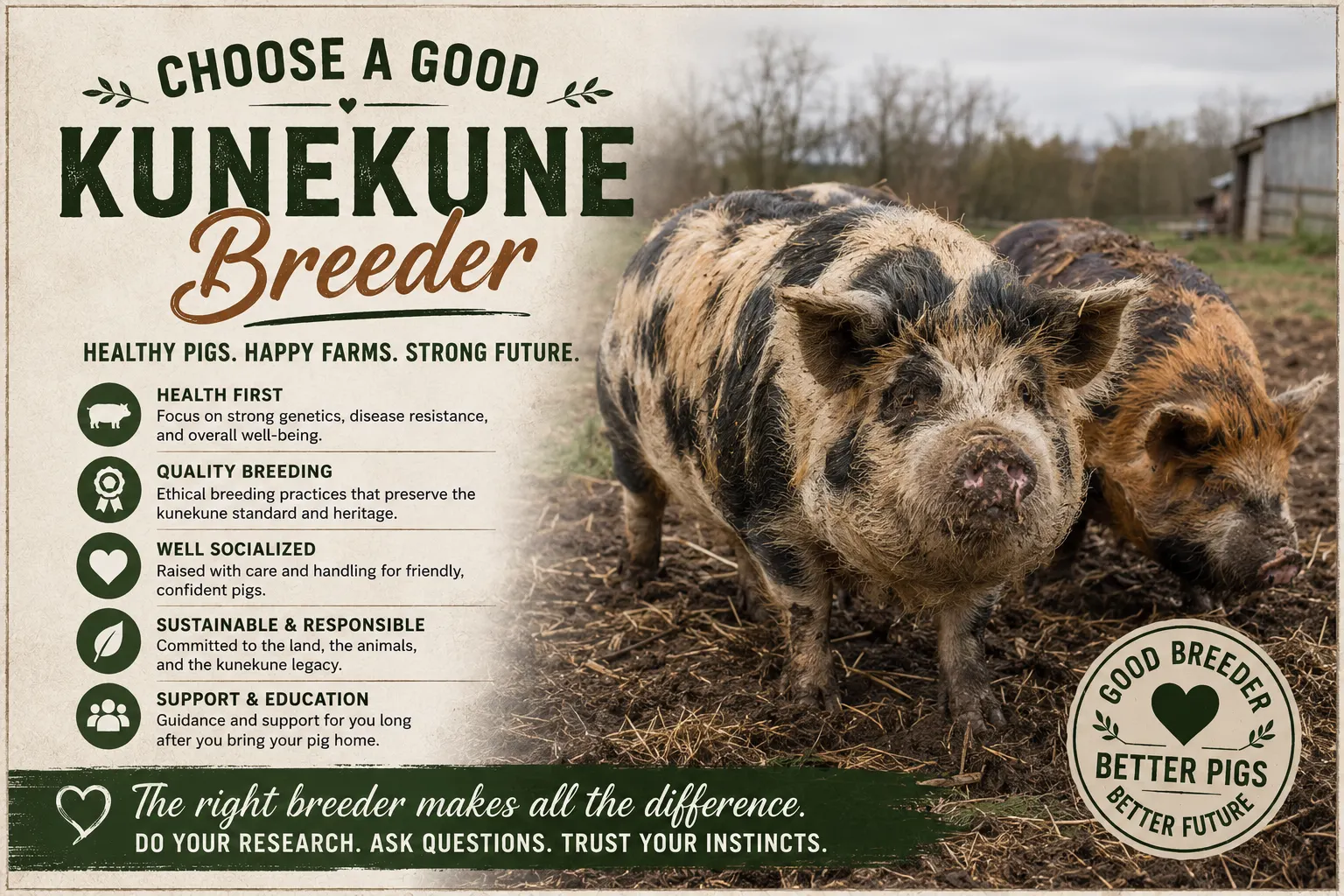
Most people searching for Kunekune pigs for sale start by looking at photos. That is natural. A colorful piglet with a friendly face can grab attention fast. But for buyers planning a breeding herd, the real value of a pig is not determined by the piglet stage alone.
The real question is what that piglet is likely to become.
A breeding pig needs to mature into an animal with good structure, sound temperament, healthy growth, useful genetics, and long-term value in a breeding program. That matters whether the goal is raising your own meat, improving a homestead herd, producing future breeding stock, or building a serious Kunekune program over time.
That is where the difference between average pigs and carefully selected breeder stock starts to show.
Not Every Registered Pig Should Be Breeding Stock

One of the biggest misunderstandings new buyers run into is assuming registration automatically equals breeding quality.
For AKKPS animals, full registration provides documented pedigree information under current registry requirements, including permanent identification and parentage DNA verification. That documentation is valuable, but registration by itself does not decide whether an individual pig should be retained as breeding stock. It does not automatically guarantee: [1]
- Structural quality
- Healthy growth
- Fertility
- Strong maternal traits
- Good temperament
- Sound movement
- Good feet and legs
- Long-term breeding usefulness
A registered pig can still have faults that make it a poor breeding choice.
Responsible breeders understand that not every pig should stay intact or be sold as breeder stock. Some pigs are better suited as feeders, companions, or non-breeding animals. Careful selection is part of protecting the breed long term.
That selection process matters more than many buyers realize.
What Good Breeder Stock Actually Looks Like
Quality breeder stock should be evaluated as a complete animal, not just a pedigree or a color pattern. The current AKKPS breed standard separately addresses body, legs, feet, health, and temperament, which is a useful reminder that a registration record and an individual animal's breeding quality are related but not identical questions. [2]
A strong Kunekune breeding prospect should show:
- Good body balance
- Straight movement
- Strong feet and pasterns
- Healthy body condition
- Good width and capacity
- Correct jaw alignment
- Calm, manageable temperament
- Healthy growth rate
- Good muscling and substance
- Sound reproductive potential
- Useful bloodlines
- Traits worth passing forward
Good breeders also pay attention to things many casual buyers never think to ask about:
- Litter consistency
- Mothering ability
- Piglet survival
- Feed thriftiness
- Long-term soundness
- Temperament under real farm conditions
- How the parents and siblings matured
- Whether the line improves or weakens over generations
A pig that only looks good at eight weeks old may not mature into a useful breeding animal.
Why Structure Matters More Than Many Buyers Expect

Structure is one of the most important parts of breeding quality because weak structure tends to become more obvious as pigs mature.
Poor feet, weak pasterns, bad leg angles, or uneven movement may not seem serious in a small piglet, but those problems can become much harder on the animal later.
Structural weakness can affect:
- Breeding ability
- Longevity
- Movement
- Weight carrying
- Soundness during pregnancy
- Overall usefulness
- Herd improvement goals
Around here, one lesson that shows up quickly is that pigs eventually tell the truth physically. A pig may photograph well as a piglet, but long-term soundness shows up in the way the animal moves, grows, carries weight, and handles real farm life over time.
That is why careful breeders evaluate mature animals, not just baby pigs.
Temperament Is Part of Breeding Quality
Kunekunes are known for generally calmer temperaments compared to many larger commercial hog breeds. But temperament still varies from pig to pig and line to line.
Good temperament matters because breeding animals need to remain manageable over time.
A breeding pig should not only be friendly when bottle-fed or small. It should mature into an animal that can be handled safely and practically during:
- Feeding
- Fencing moves
- Veterinary care
- Breeding season
- Farrowing
- Daily chores
Temperament problems can become harder to manage once a pig reaches mature size. Good breeders pay attention to disposition early because behavior traits can become consistent across generations.
Bloodlines Matter — But Not in the Way Some Buyers Think
Bloodlines matter because genetics matter. But bloodline names alone do not guarantee quality.
A famous pedigree does not automatically produce a great pig. Good breeding still requires:
- Honest selection
- Careful pairing decisions
- Evaluation of offspring
- Strong culling standards
- Attention to structure and health
- Long-term planning
The practical test is not whether a pig has a recognizable name somewhere in the pedigree. The practical test is whether the animal consistently produces healthy, useful offspring generation after generation.
That takes work.
Why Inbreeding and Genetic Planning Matter

In smaller livestock breeds like Kunekunes, genetic planning becomes especially important. Many pigs trace back to a limited number of bloodlines, so breeders need to pay attention to how related their animals are.
Responsible breeders study pedigrees carefully and avoid careless close-relative pairings.
Good genetic planning helps protect:
- Fertility
- Piglet strength
- Structural soundness
- Growth
- Temperament
- Overall vigor
- Long-term herd quality
A serious breeder should be able to explain why a pairing was chosen and what strengths they hoped to improve.
Advantages of Buying From BF Farm Kunekune Pigs
Choosing breeder stock is not just about buying pigs. It is about choosing the foundation for future years of breeding decisions.
BF Farm Kunekune Pigs focuses heavily on practical breeder quality instead of simply producing large numbers of piglets. The goal is to raise pigs that work well for families and homesteads wanting dependable breeder stock for real long-term use.
Careful Selection Over Volume
I have always been more comfortable keeping fewer breeding animals I believe in than expanding numbers just to make the herd look bigger. That philosophy matters most at the beginning of a program, because the first boar and sows shape years of later decisions. A registered pig can give you documentation; it still has to earn its place as breeding stock through structure, temperament, soundness, pedigree, and fit with the herd.
Not every piglet is automatically considered breeder quality.
Selection matters because future herd quality depends on it. Breeding prospects should demonstrate traits worth preserving, including:
- Structure
- Temperament
- Growth
- Manageability
- Overall soundness
That approach helps buyers avoid starting with weak foundation animals.
Focus on Useful Breeder Stock
The farm's focus is not simply selling cute pigs. The emphasis is on Kunekunes that can contribute to:
- Responsible breeding programs
- Homestead meat production goals
- Long-term herd improvement
- Practical small-farm setups
- Sustainable breeding plans
That changes how pigs are evaluated and selected.
Real Farm Experience
Good breeding decisions are easier to make when pigs are observed daily under real farm conditions.
On a working farm, animals are evaluated through:
- Seasonal weather changes
- Daily chores
- Growth over time
- Group behavior
- Fence pressure
- Feeding behavior
- Soundness as they mature
- Reproductive performance
- Piglet development
That daily observation matters because long-term strengths and weaknesses become easier to recognize over time.
Honest Guidance for Buyers
Many new buyers are entering livestock ownership for the first time. Honest guidance matters far more than high-pressure sales talk.
Buyers should understand:
- What kind of pig they are purchasing
- Whether it is suited for breeding
- What setup is needed
- What long-term responsibilities look like
- How herd planning works
- How genetics affect future options
A good breeder helps buyers make better long-term decisions instead of simply trying to move piglets quickly.
Long-Term Herd Thinking
Good breeder stock should still make sense years later.
That means thinking beyond:
- Baby piglet photos
- Temporary trends
- Color alone
- Fast sales
Strong herd planning looks at where future generations are headed and whether the animals being retained truly improve the breed.
Questions Serious Buyers Should Ask

Buyers looking for breeder stock should not be afraid to ask detailed questions.
Helpful questions include:
- Why was this pairing made?
- Are the parents related?
- What traits are strongest in this line?
- What weaknesses are you watching for?
- Which piglets are truly breeding quality?
- How have older siblings matured?
- What are the parents like as adults?
- What kind of herd goals would this pig fit best?
- Have these lines produced good mothers?
- How widely are these genetics already represented?
Responsible breeders should welcome thoughtful questions.
Planning Your Herd the Right Way
One of the biggest beginner mistakes is buying pigs without a long-term herd plan.
Before purchasing breeder stock, buyers should think about:
- Future boar needs
- Relatedness between animals
- Space requirements
- Fencing
- Feed costs
- Future replacement gilts
- Breeding goals
- Meat production goals
- Whether they want to expand later
A breeding herd should be built intentionally, not randomly.
Why Cheap Pigs Can Become Expensive
Price matters, but cheapest is not always cheapest long term.
Weak breeder stock can create expensive problems later through:
- Poor litters
- Slow growth
- Weak structure
- Poor fertility
- Difficult temperament
- Reduced productivity
- Limited breeding options
- Shorter usefulness
Quality foundation animals often save frustration later.
A stronger starting point gives buyers better long-term flexibility and better future herd potential.
Final Thoughts
Finding Kunekune pigs for sale is easy. Finding carefully selected breeder stock takes more work.
The best breeding pigs are not chosen only because they are cute, colorful, or registered. They are selected because they have the structure, temperament, genetics, and long-term qualities needed to improve future generations.
BF Farm Kunekune Pigs focuses on quality breeder stock for buyers who want more than temporary novelty. Whether the goal is building a responsible breeding program, raising pigs for homestead meat production, or improving a small herd over time, strong foundation animals matter.
A good breeding program starts long before the first litter. It starts with choosing the right pigs in the first place.
About the Author
My breeding work includes evaluating registered breeding prospects, pedigrees, structure, temperament, and pairing fit. This article reflects the selection standard I use when thinking about foundation animals: documentation matters, but the animal in front of you matters just as much.