
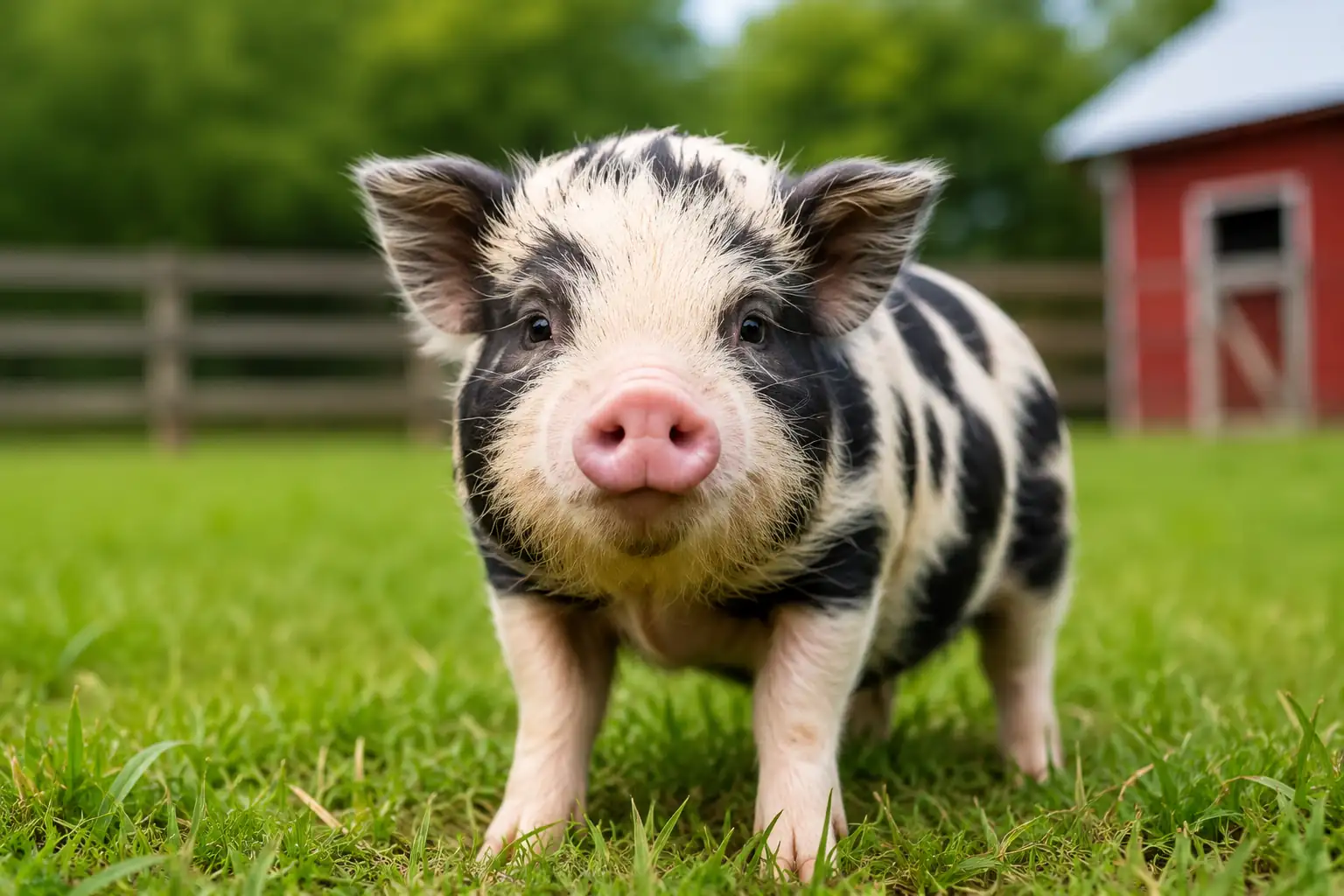
A lot of people start looking at Juliana pigs because they want a small, cute, manageable pig. That part is easy to understand. The problem is that small is often the hook, not the whole truth.
My hands-on experience is with Kunekunes, not Juliana pigs, so I am not presenting this as a firsthand review of Juliana breeding. What I can speak to after years of working with Kunekune buyers is the buying decision: adult expectations, parent information, structure, temperament, purpose, and breeder transparency matter more to me than a size label or a cute piglet photo.
Juliana pigs are described by veterinary sources as one of several miniature-pig breeds, but labels such as “teacup,” “micro,” or “pocket” do not provide a dependable mature-size guarantee. Adult size can be difficult to predict from a piglet alone, so fully grown parent size and health history are more useful than sales labels. [1] [2]
The Biggest Risk Is Believing the Baby Size

Piglets are naturally small. That does not mean they will stay tiny.
One of the oldest tricks in the small-pig market is selling a young piglet while it is still easy to hold, photograph, and present as a permanent size. A buyer should be asking about mature parent size, health history, temperament, feeding, structure, and long-term suitability. [1]
A good breeder should be willing to talk about the pig's future, not just how cute it looks today.
Size Promises Can Create Real Problems

When a pig grows larger than expected, the owner may suddenly face problems with:
- local ordinances
- fencing
- shelter space
- feed cost
- manure management
- transport
- family expectations
- rehoming difficulty
That is not just inconvenient. It can become unfair to the pig.
A pig that was purchased as a tiny house pet may eventually need outdoor space, stronger fencing, better shelter, and more management than the buyer planned for. When expectations are wrong from the beginning, the pig often pays the price.
Poor Breeding Can Hide Behind Cute Photos

A spotted piglet with a tiny nose and bright eyes can still come from poor breeding choices.
Buyers should be cautious if the seller cannot clearly explain:
- the pig's parents
- mature size expectations
- health history
- structural soundness
- temperament
- whether the pig is suitable for breeding or pet-only
- what support is available after purchase
When I evaluate whether a pig fits a buyer, the practical test is not just whether the piglet is cute. I am looking at whether that pig has the structure, health, temperament, and long-term usefulness to fit the buyer's real goals.
Mini Does Not Mean Easy
Even smaller pigs are still pigs.
They root. They test fences. They need proper minerals, water, shelter, hoof care, parasite management, safe handling, and consistent routines. A small pig with poor temperament or poor structure can be harder to manage than a larger pig bred with care.
That is one reason buyers should be careful about choosing a pig based only on size. Manageability comes from more than weight. Temperament, breeding, health, structure, and daily handling all matter.
Juliana Pigs May Not Fit Every Goal
A Juliana pig may be fine for some pet homes when purchased responsibly. But for buyers wanting productive homestead pigs, meat production, or breeding stock with practical long-term value, the decision deserves extra caution.
Ask yourself:
- Do I want a pet, a breeder, or a meat-production animal?
- Do I know what this pig should look like as an adult?
- Am I buying from proven parent stock?
- Can I handle the pig if it grows larger than expected?
- Is the breeder educating me or just selling cuteness?
Those questions matter because a pig is not a decoration. It is a long-term animal with real care needs.
The Value of Choosing a Recognized Breed
One challenge with many pigs marketed as Juliana, teacup, micro, or designer miniature pigs is that buyers may be relying more on marketing descriptions than on a well-documented breed standard.
Choosing a recognized breed can make it easier to understand what you are purchasing.
For example, registered Kunekune pigs have established breed standards, known bloodlines, documented pedigrees, and a long history as a practical small-stature livestock breed. While no breeder can guarantee an exact adult size, buyers can generally make more informed decisions when parentage, genetics, and breed characteristics are clearly documented. [3]
Benefits of working with a recognized breed and reputable breeder include:
- known breed characteristics
- documented pedigrees and bloodlines
- more predictable adult size ranges
- established temperament expectations
- better breeding records
- access to breeder support and breed organizations
- greater confidence in long-term herd planning
For homesteaders, small farms, and families looking for livestock rather than novelty pets, those advantages can help avoid costly surprises later.
Why Registered Kunekune Pigs Are Worth Considering
Kunekune pigs are not just cute pasture pigs. They are a recognized breed with traits that make sense for many small farms and homesteads.
A well-bred registered Kunekune gives buyers more information to work with. You can evaluate bloodlines, parent stock, structure, temperament, and breeding goals. That matters if you are planning to raise your own pork, build a breeding program, or start a herd that needs to be manageable for years.
My Kunekune breeding program primarily focuses on quality breeder stock for people who want pigs with a real purpose: producing their own meat, starting a responsible breeding program, or building a practical homestead herd.
That does not mean every Kunekune is automatically the right pig. Buyers still need to choose carefully. But starting with a known, documented breed gives you a stronger foundation than buying a mystery tiny pig based on a sales promise.
Better Questions Before Buying
Before buying any Juliana pig, miniature pig, or small-breed pig, ask:
- How old are the parents?
- What do the mature parents weigh and measure?
- Can I see current adult photos?
- Is the pig registered or documented in a meaningful way?
- What health issues have appeared in the line?
- Is this pig being sold for breeding or pet-only?
- What support is available after the sale?
- What happens if the pig does not fit my home later?
A responsible seller should not be offended by serious questions.
Final Thoughts
The risk of buying Juliana pigs is not that every Juliana pig is a poor choice. The risk is buying a pig based on marketing promises instead of reliable information.
A good pig purchase should be built on honesty, preparation, health, temperament, and realistic expectations. Buyers should understand exactly what they are bringing home, what that pig is likely to become as an adult, and whether it fits their long-term goals.
For many homesteaders, choosing a recognized breed such as a registered Kunekune pig provides greater confidence because the breed's characteristics, bloodlines, and breeding history are better documented. That does not eliminate responsibility, but it can make planning and decision-making much easier.
Whether your goal is raising your own pork, starting a breeding program, or adding pigs to a family homestead, the best purchase is usually the one backed by proven genetics, transparent breeding practices, and realistic expectations, not the one making the smallest promises.
About the Author
Mark Bengtson draws on conversations with buyers about what they actually need from a pig. He does not claim firsthand Juliana breeding experience in this article; the Juliana and miniature-pig facts are drawn from cited veterinary sources, while the buyer-selection perspective reflects his Kunekune breeding work.