

Learn about Kunekune pork flavor, fat, cuts, cooking temperatures, nutrition, comparisons with other meats, whole-carcass use, and how finishing affects eating quality.
Kunekune pork is often valued for rich eating quality and useful carcass fat, but I do not think it is honest to promise one fixed “Kunekune flavor.” Breed matters, but so do finishing diet, age, body condition, fat level, stress, processing, aging, storage, and cooking. When someone asks me what Kunekune pork tastes like, I would rather explain those factors than repeat claims that every Kunekune is automatically sweeter, nuttier, leaner, or healthier than other pork.
What Does Kunekune Pork Taste Like?
People often describe heritage pork as richer or fuller-flavored than very lean commodity pork. That description can be useful, but flavor is subjective and the individual pig matters. At BF Farm, I treat “rich pork flavor” as an eating-quality expectation to evaluate in the finished animal—not as a guaranteed breed label.
Fat is part of that experience. Kunekunes can carry substantial fat when they are fed and finished to that condition, and that fat can contribute moisture, texture, sausage quality, bacon, charcuterie, and rendered lard. A leaner-finished Kunekune and a heavily finished Kunekune can eat very differently even though both are the same breed.
Flavor is one consideration; selecting and finishing the animal is another. The Kunekunes for meat guide explains the practical reasons some families choose Kunekunes for home pork production without promising a uniform result from every pig.
Flavor Comes From More Than Breed

Breed can influence carcass and eating characteristics, but flavor and texture are also shaped by what happens before and after processing. Finishing diet, forage, age, sex, body condition, stress, chilling, aging, freezing, storage, and cooking can all change the final result.
This is why I am cautious with claims such as “pasture makes the pork sweet” or “Kunekunes have a natural nutty flavor.” Those may be honest personal descriptions of a particular meal, but they should not be presented as universal breed facts. For a deeper comparison of pasture-based and conventional systems, see Pasture-Raised vs. Commercial Pork: What’s the Difference?.
Why Kunekune Fat Matters in the Kitchen
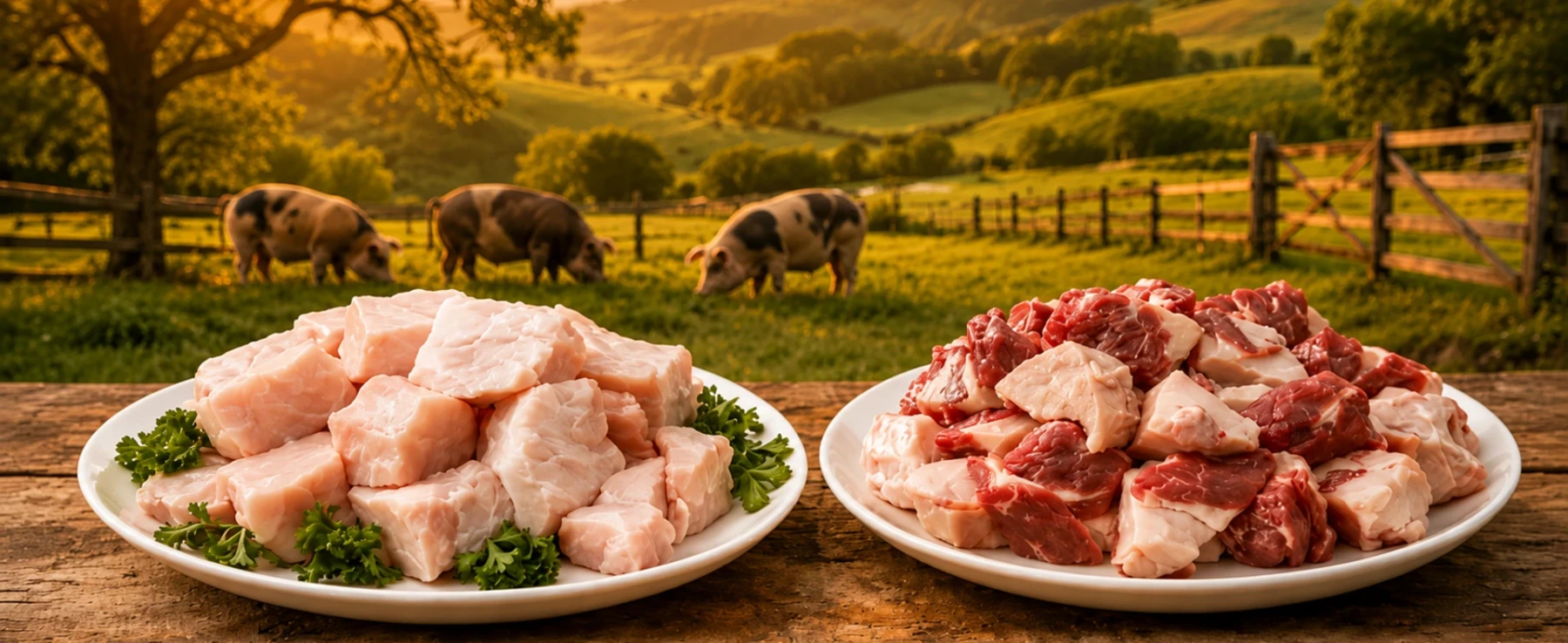
One of the most useful culinary differences in many Kunekune carcasses is not a slogan about flavor—it is having fat worth using. Back fat and trim can support sausage making, belly can become bacon, jowl can be cured, and leaf fat can be rendered for cooking or baking. AKKPS describes a wide range of traditional uses for Kunekune fat, jowl, belly, hocks, trotters, organs, and other parts of the carcass. [1]
I think this is where Kunekune pork makes the most sense for a small farm: use the carcass well. If you only want very lean boneless chops, a fattier heritage-style pig may not match what you are looking for. If you value sausage, bacon, slow-cooked cuts, lard, bones, and whole-animal use, the same fat becomes an advantage.
If a household wants to render fat, say so before the cut sheet is finalized. The raising Kunekunes for lard covers feeding, body condition, saving usable fat, and why rendering needs sound food-handling practices.
Which Cuts Work Best for Which Cooking Methods?

The anatomy is the same basic pork anatomy found in other hogs. What changes is the size of the cuts, the amount of fat, and how the animal was finished. AKKPS’s pork-cut guidance emphasizes the same practical idea: match the cut to the cooking method. [1]
- Shoulder / Boston butt: braising, smoking, pulled pork, stews, or other slow cooking.
- Loin and chops: roasting, grilling, pan cooking, or other faster methods that protect tenderness.
- Tenderloin: quick cooking; it is naturally tender and can dry out if overcooked.
- Belly: bacon, slow roasting, braising, or crisped preparations.
- Ribs: smoking, barbecuing, roasting, or slow cooking.
- Leg / ham: fresh roasts, ham steaks, or curing and smoking.
- Jowl: fresh use or curing for jowl bacon/guanciale-style products.
- Fat: sausage, rendering, baking, frying, or other value-added uses.
If you are planning a whole pig, I recommend thinking about the cut sheet before processing rather than after. The separate Kunekune Meat Yields: Live Weight, Hanging Weight, and Freezer Pork guide goes deeper into cut-sheet choices, carcass yield, freezer weight, fat, bones, and what actually comes home from the processor.
A processor cannot guess how a family prefers to cook. The Kunekune pig processing guide can help organize the questions to ask about roast sizes, sausage, skin, curing, and what fat or organs may be returned.
Cooking Temperature and Tenderness Are Different Questions

Food-safety minimums and the temperature that makes a particular cut tender are not always the same thing. USDA FSIS recommends cooking whole-muscle pork steaks, chops, and roasts to at least 145°F (62.8°C) followed by a 3-minute rest. Ground pork should reach 160°F (71.1°C). [2]
A loin chop may be ready near the food-safety minimum, while shoulder or other collagen-rich cuts are often cooked much farther for texture. I use a thermometer for safety and then let the cut and cooking method determine the tenderness target.
Nutrition Depends on the Cut, Not Just the Breed
The amount of total fat and saturated fat changes substantially by cut, trimming, serving size, and preparation. A trimmed loin chop is nutritionally very different from belly, sausage, bacon, or rendered lard.
That is why I do not describe Kunekune pork as automatically “leaner,” “lower-fat,” or “healthier” than conventional pork. If nutrition is the question, look at the actual cut and how it is prepared rather than relying on the breed name alone. The separate Pork Fat vs. Beef Fat: Understanding the Differences guide handles the fat-composition and heart-health discussion more carefully.
How Pork Compares With Other Meats
It is more useful to compare actual foods than entire species. USDA groups meat, poultry, seafood, eggs, legumes, nuts, seeds, and soy foods as protein choices and recommends variety; it lists options such as pork loin, lean beef, and skinless poultry among leaner choices. [3]
The same logic applies to fat. A trimmed pork loin is not nutritionally equivalent to bacon or belly, just as lean beef is not equivalent to heavily marbled beef or tallow. American Heart Association guidance recommends leaner cuts and limiting saturated fat rather than treating the animal species by itself as the deciding factor. [4] [5]
Processed meats are another separate comparison. Bacon, sausage, cured ham, hot dogs, and many deli products can differ substantially in sodium, fat, calories, and serving size from fresh pork cuts. For BF Farm, the practical point is simple: Kunekune pork can be excellent food, but the honest comparison is cut-to-cut, preparation-to-preparation, and production-system-to-production-system—not a blanket claim that one species or breed is medically superior.
Using the Whole Carcass
A heritage-style carcass gives a small farm options. Trim can go into sausage. Back fat and leaf fat can be saved rather than discarded. Jowl, hocks, bones, organs, skin, and feet can all have traditional uses depending on the household and processor. AKKPS’s pork dictionary provides a useful overview of those possibilities. [1]
For me, that whole-carcass flexibility is more meaningful than trying to sell Kunekune pork with a single flavor adjective.
Waste prevention starts well before the butcher date, with a healthy feeder pig and a plan for its eventual use. The raising feeder pigs guide connects the kitchen end of the project to daily care and costs.
What Buyers Should Ask Before Buying Kunekune Pork

- At what age and body condition are the pigs normally processed?
- What are they fed during finishing?
- How much pasture or forage is part of the production system?
- How much fat do previous pigs from the same program typically carry?
- Which cuts does the producer think work especially well from these pigs?
- Can the processor save jowl, fat, bones, organs, or specialty cuts if you want them?
- Is the pork sold by hanging weight, packaged weight, individual cut, half, or whole animal?
Those questions tell you far more than a claim that all Kunekune pork tastes one particular way.
BF Farm’s Perspective
I raise Kunekunes as livestock, so I look at the pork as the end result of the entire management system: genetics, feeding, pasture, body condition, processing, and how the carcass is used. I like the breed’s small-farm practicality and the fact that a well-finished carcass can provide useful fat along with the familiar pork cuts people expect.
What I do not want to do is turn personal taste into science. If someone tells me their Kunekune pork tastes richer, sweeter, or different from store-bought pork, that may be completely genuine. I simply would not promise that every animal will taste exactly the same. The better expectation is good husbandry, thoughtful finishing, careful processing, and cooking the cut appropriately.
Sources & References
- American KuneKune Pig Society: Pork Cut Dictionary
- USDA FSIS: Safe Internal Temperatures for Meat and Poultry
- USDA MyPlate: Protein Foods
- American Heart Association: Making the Healthier Cut
- American Heart Association: Saturated Fats
About the Author
I have raised Kunekunes at BF Farm since 2011 and have approached them as practical livestock as well as breeding animals. My firsthand contribution here is the producer side—how finishing, body condition, carcass fat, processor choices, and whole-animal use affect what ends up in the kitchen. Where the article makes food-safety or cut-specific claims, I keep those tied to the cited sources rather than presenting personal preference as a scientific conclusion.