
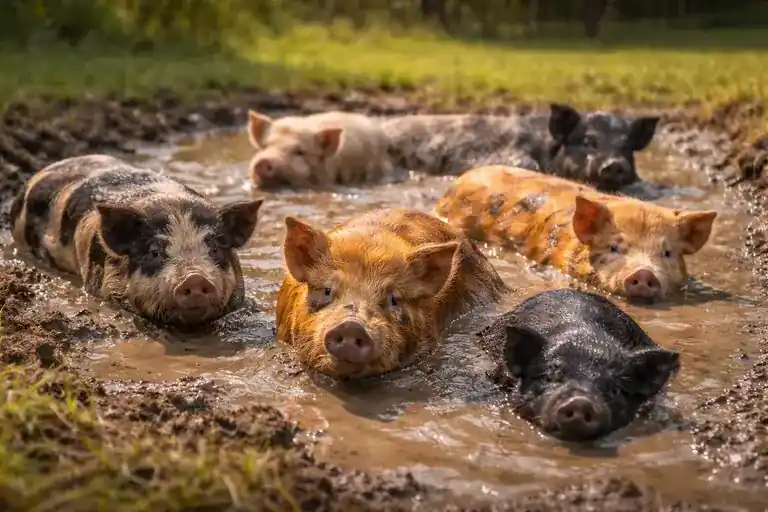
Kunekune pigs are known for their calm temperaments, grazing ability, and hardy nature, but warm weather still needs to be taken seriously. Like other pigs, Kunekunes do not cool themselves well through sweating, which means heat can build up fast when temperatures climb, especially when humidity is high or airflow is poor.
The good news is that warm-weather care is mostly about good daily management. With shade, clean water, a place to cool off, and a routine built around the hottest part of the day, most Kunekune pigs handle summer much better.
-
Make Shade a Priority
Shade is not optional in warm weather. Pigs exposed to direct sun heat up much faster, so shaded areas should be available throughout the day, with enough room for all pigs to use them at once. Good shade also works best when there is airflow, so a breezy shelter, trees, shade cloth, or a well-positioned loafing area will help more than a closed, stuffy structure.
For Kunekunes on pasture, it helps to think beyond “there is some shade somewhere” and instead ask: Can every pig get into it comfortably at the hottest time of day? If the answer is no, add more shade before the next hot stretch.
-
Keep Fresh Water Available at All Times
In hot weather, water is the first thing to check and the last thing to overlook. Pigs can dehydrate quickly, so a constant supply of fresh, clean water is essential during hot or humid conditions.
Warm-weather management also means checking waterers more than once a day, because a tipped tub, clogged nipple, or muddy trough can turn into a serious problem fast. A simple routine that helps is checking water in the morning, again in early afternoon, and again in the evening during the hottest weeks.
-
Give Them a Way to Cool Their Bodies
Kunekunes often do best when they have a practical way to cool themselves, not just hide from the sun. A wallow, mud area, sprinkler, or other cooling option helps lower body temperature and gives pigs relief when the weather is hot.
If you use a hose or sprinkler, use cool water rather than ice-cold water, and let the pigs dry between wettings. Fans can also help, especially in shelters or holding areas where air tends to sit still.
-
Adjust the Daily Routine Around the Heat
One of the easiest summer management changes is timing. Feeding, pen checks, movement, loading, and other chores are better done in the cooler parts of the day.
If you need to move pigs, trim feet, separate groups, or do any hands-on work, try to do it before the day heats up. Summer is not the time to make pigs hustle in the hottest part of the afternoon.
-
Expect Appetite to Change
Pigs often eat less when the weather is hot. That is a normal heat response, because digestion creates body heat.
For Kunekune owners, this means two things. First, do not ignore a drop in appetite during hot weather. Second, offer feed during cooler hours when pigs are more likely to eat comfortably. If one pig goes noticeably off feed while the others are acting normally, or if reduced appetite is paired with lethargy or hard breathing, it is time to look closer and contact your veterinarian.
-
Learn the Early Signs of Heat Stress
The biggest mistake in summer pig care is waiting too long to act. Common signs of heat stress in pigs include rapid breathing, open-mouth breathing or panting, lethargy, reduced feed intake, blotchy skin, reluctance to move, and in worse cases muscle tremors.
A pig that is stretched out, breathing hard, not interested in food, and trying to stay still in the shade is telling you something. Listen early.
-
Know When It Is an Emergency
If a Kunekune pig is open-mouth breathing heavily, very weak, unable to rise, trembling, or not responding normally, treat it as urgent. Move the pig to shade or a cooler area, apply cool water gradually rather than shocking it with ice-cold water, increase airflow with a fan if possible, and call your veterinarian.
It is always better to overreact a little in hot weather than to wait and hope a pig will bounce back.
A Simple Summer Checklist for Kunekune Owners
Before the next hot spell, make sure your pigs have:
- Dependable shade with room for everyone
- Fresh, clean water available all day
- A wallow, sprinkler, or another cooling option
- Chores scheduled for morning or evening
- Close monitoring for panting, lethargy, and reduced appetite
Warm-weather pig care does not have to be complicated. Usually, it comes down to paying attention early, setting up the environment well, and making it easy for your Kunekunes to stay cool before they start to struggle.